concepts · updated 2026-08-01
Archive photographs
confidence: high volatility: cold verified: 2026-08-01fresh
These six image files document physical structures, projects, and instructional material related to the solar and thermal work. Originally filed without dates, they have been identified and renamed.
These six image files document physical structures, projects, and instructional material related to the solar and thermal work. Originally filed without dates, they have been identified and renamed.
What the photographs show
Andy Shack — Temperature monitoring charts
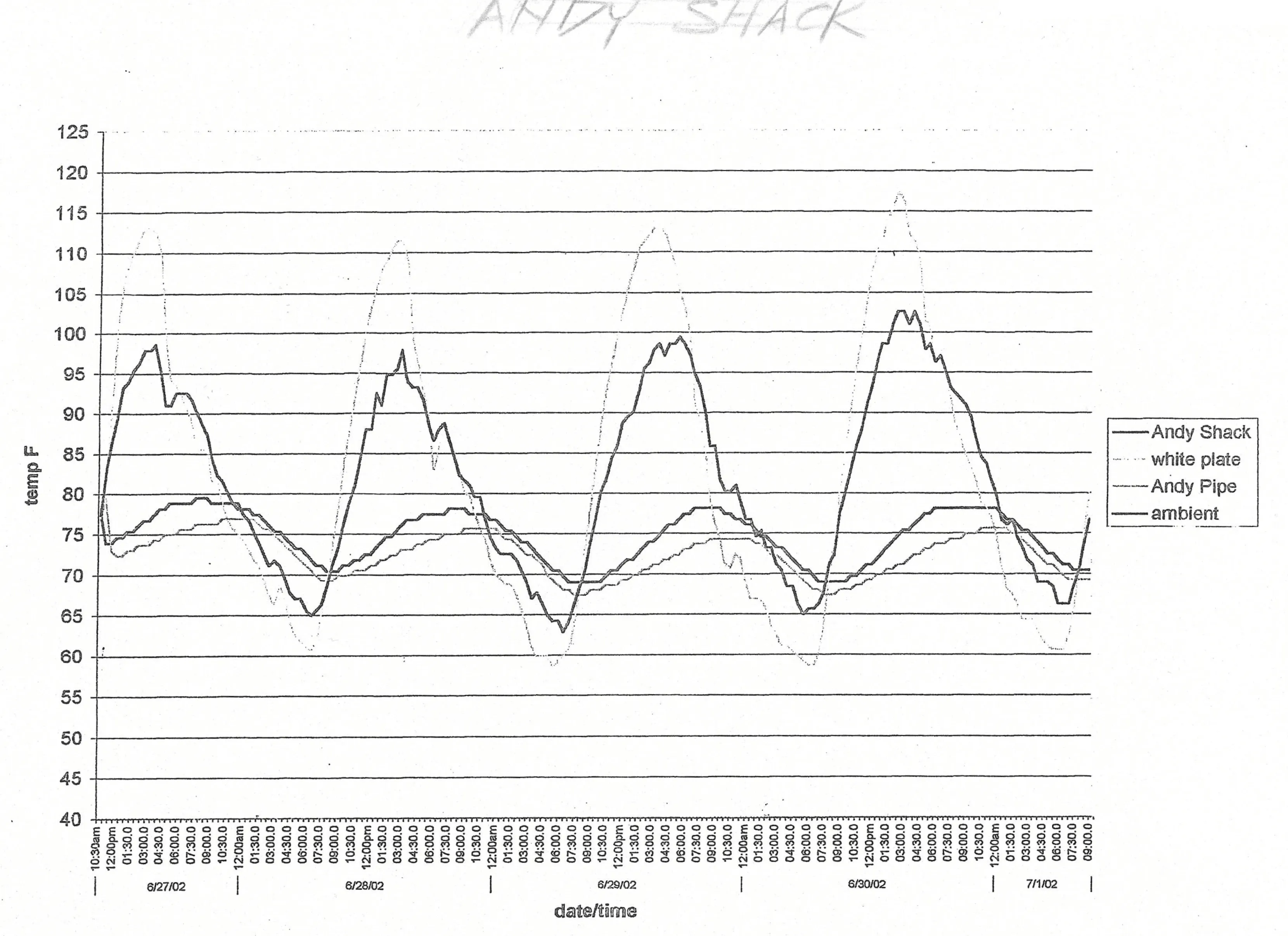
Andy Shack — temperature monitoring chart, June 27 – July 1, 2002, tracking shack interior, storage pipe (“Andy Pipe”), ambient, and a white comparison plate. The Andy Shack is the Zomeworks test building in Albuquerque, used for experiments since 1988. Shack interior stays roughly 65–80°F while the white plate swings from about 60°F to over 110°F.
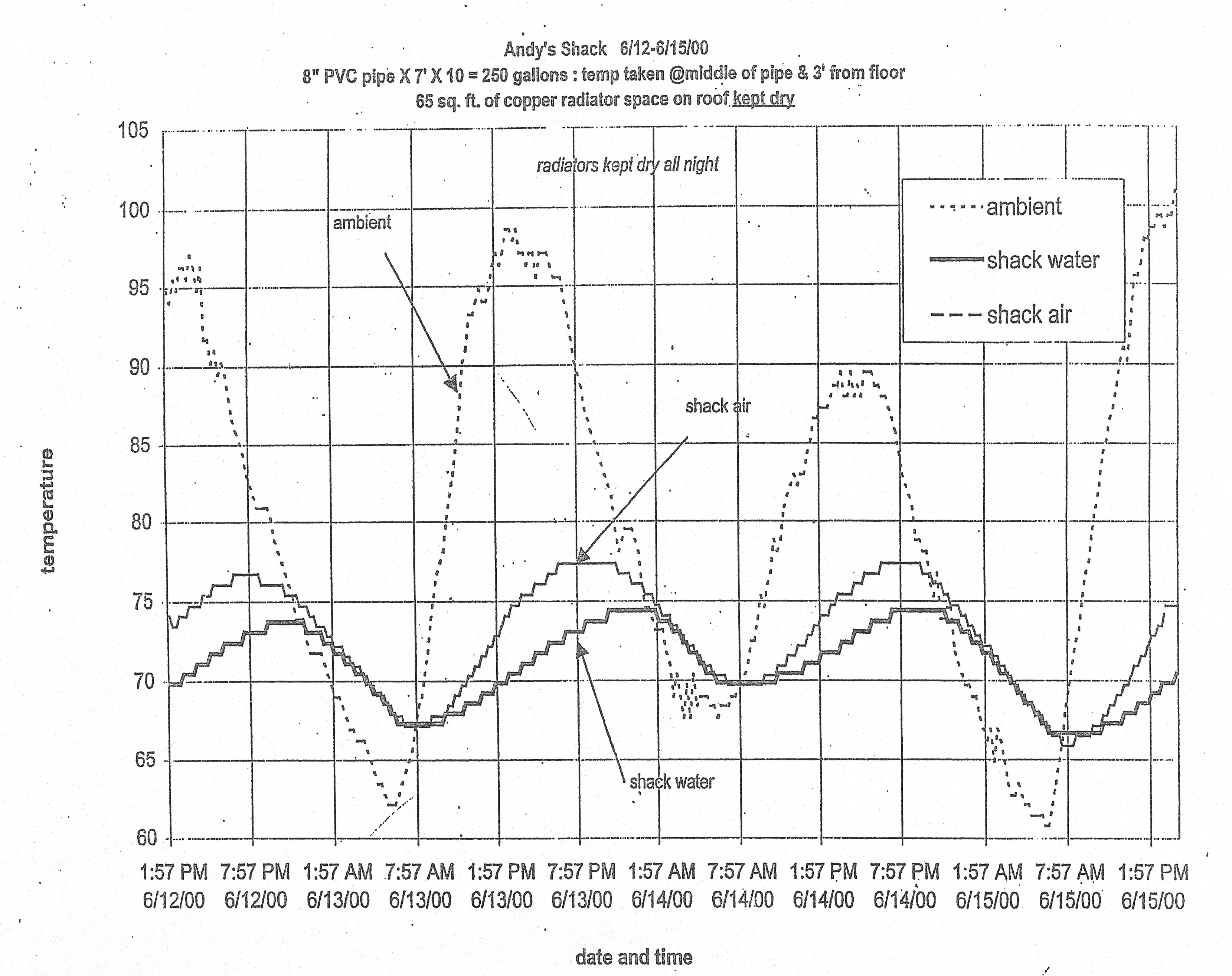
Andy Shack — temperature monitoring chart, June 12–15, 2000: shack water vs. shack air vs. ambient, for the 250-gallon 8” PVC pipe storage with 65 sq ft of roof-mounted copper radiators kept dry all night. Interior air holds roughly 67–78°F against ambient swings of about 62–100°F.
Bruce W. Davis Studio — Double Play installation
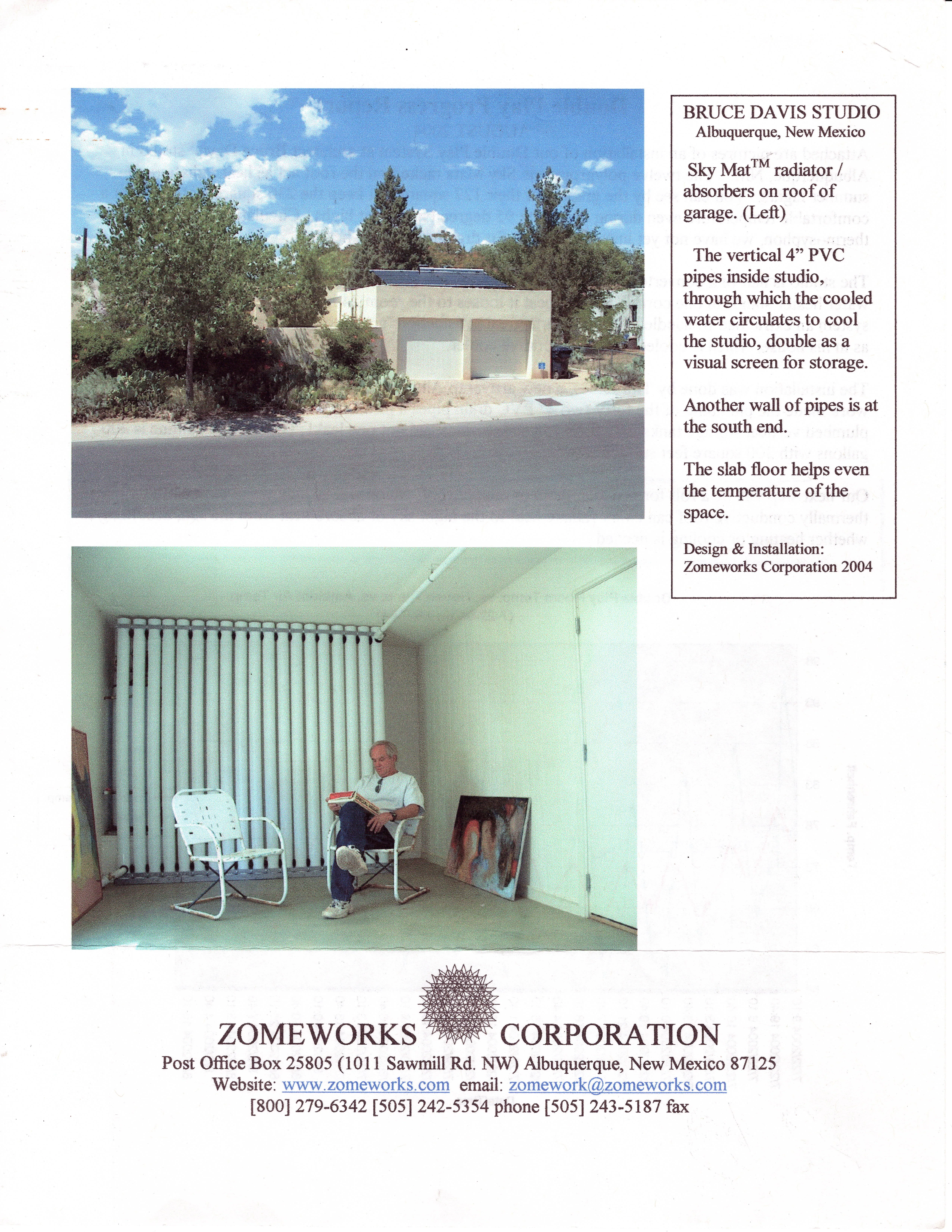
Bruce W. Davis Studio — Sky Mat radiator/absorbers and thermosiphon cooling, August 2004. The same project appears in the Baer AIA slideshow as: “Double Play™ System using Skymats™ to Cool Studio for Bruce Davis, Architect, Albuquerque, NM (2004).”
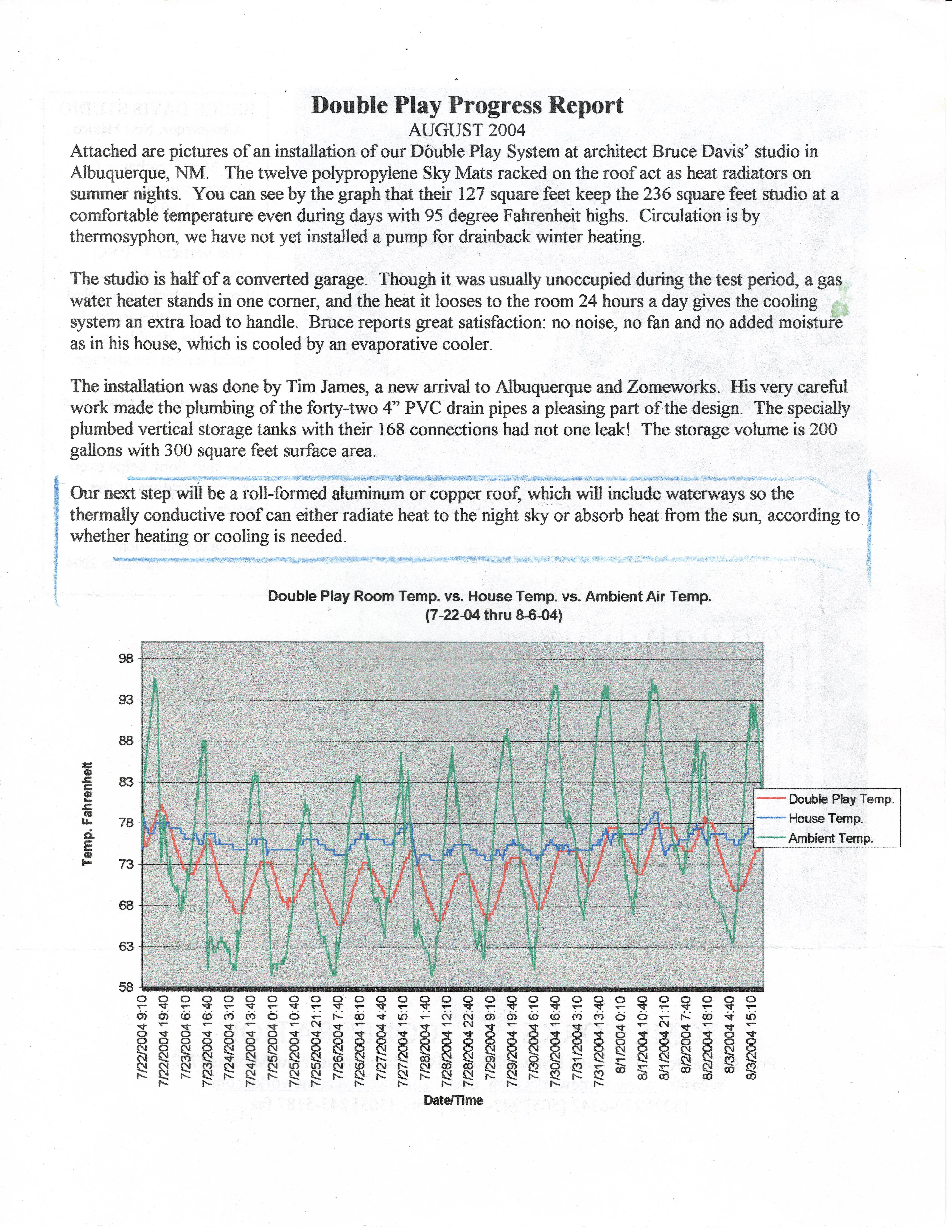
Double Play installation progress report — the earliest visual documentation of a Zomeworks system deployed at a collaborator’s building.
Cool Cell documentation
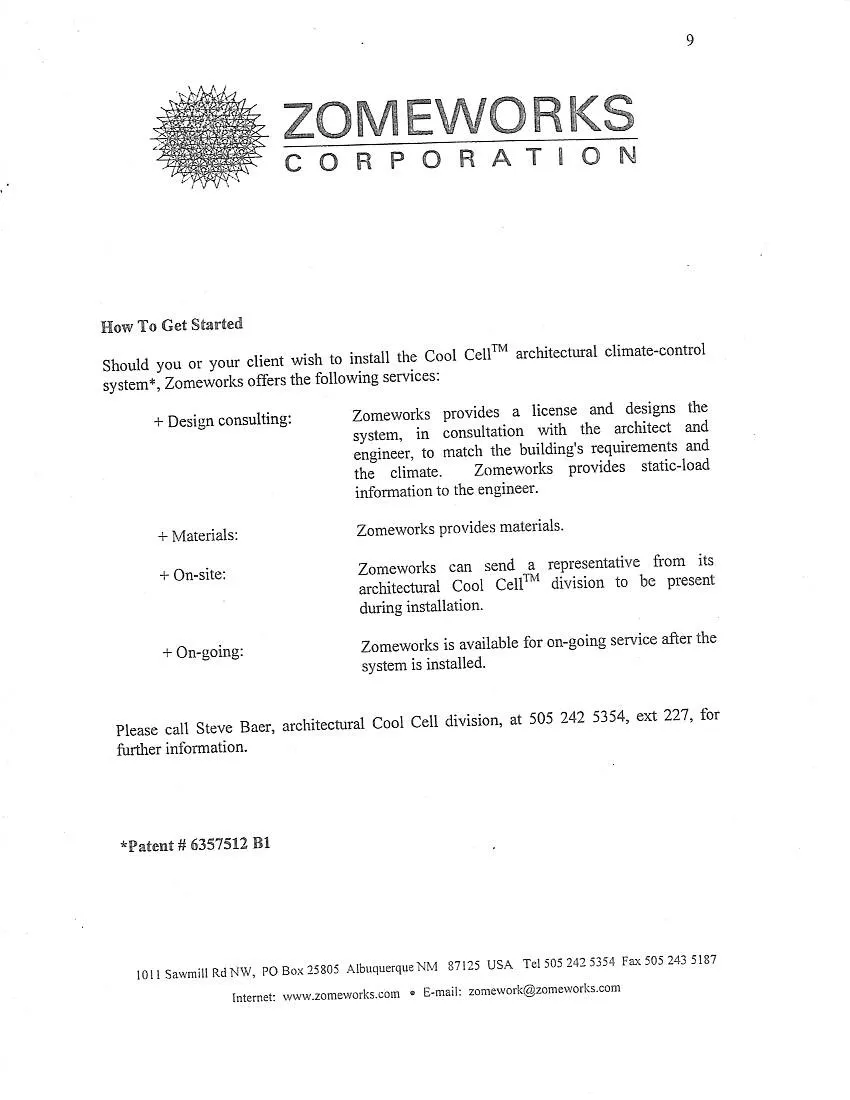
How To Get Started — Cool Cell installation. Zomeworks services: design consulting, materials, on-site support.
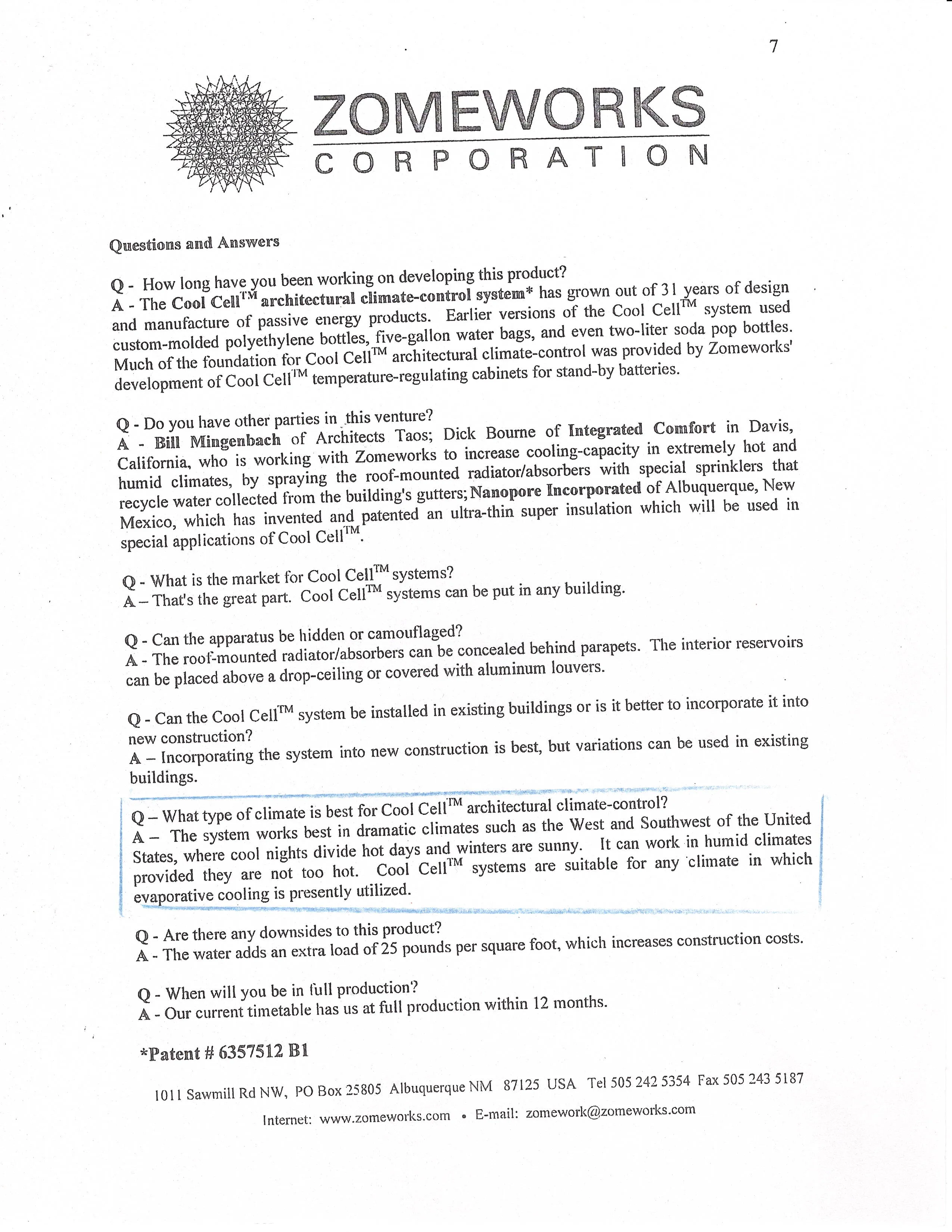
Cool Cell Q&A — development, partners, market, installation, and production.
Why it matters
The Andy Shack is explicitly referenced in the storing-heat-for-cloudy-winter-days source, where temperature measurements from March 2001 show the shack at 60°F with shutters closed (45°F outside, 90°F overhead pipes) and 75–80°F with shutters open. The Andy images are primary visual evidence for the thermal shutter system.
The Davis Studio photos are the earliest visual documentation of a Double Play installation on a collaborator’s building — confirming that Zomeworks systems were deployed outside the company’s own yard by 2004.
See also
- Overhead thermal shutters
- Building thermal storage
- Cool Cell architectural climate-control
- Index
- The Baer House
- Bruce W. Davis
- Baer AIA passive solar slideshow
- Double plays old and new
- Bruce Davis Sol-Mod House — photo gallery
- Bruce Davis Studio — the studio building shown in the Double Play installation photographs